
☑️ Three main differences
Space Operation Ability:
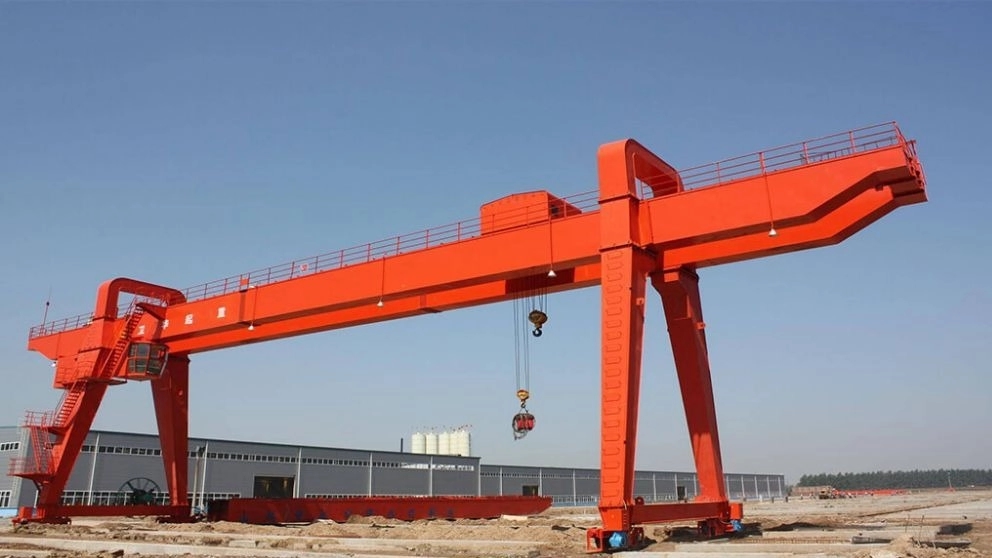
Overhead cranes are installed on elevated gangways of existing structures, allowing them to fully utilize the space under the bridge to move materials without being hindered by ground equipment. On the other hand, gantry cranes have their own legs which limit the available working area.
flexibility/maneuverability:
Applications:
Overhead cranes are installed inside the buildings they operate in, making them ideal for warehouse factories where they are often crowded and every inch of space is valuable. They are widely used in heavy-duty applications in industries such as manufacturing, steel production, and automotive assembly, and are commonly found in workshops and warehouses. Gantry cranes are more versatile and can be used in a wider range of industries including construction, transportation and storage. They are mainly used for bulk and bulk cargo handling operations and are widely used in port terminals.
☑️ Selection of the most suitable crane
Example One:
The factory is not enough to meet the bridge crane installation standards. To install the bridge crane, additional columns and load-bearing beams must be added, which will result in high costs.
In order to save costs, an alternative option is to install a gantry crane inside the factory. Gantry cranes have their own tracks on the ground, so they only require foundation and track installations without the need for supporting columns and beams. This can significantly reduce the overall cost compared to a bridge crane. Some users may consider whether installing tracks will affect other handling equipment within the plant, such as forklifts. However, this problem can be solved by installing tracks at a height of at least 100 mm from the floor to ensure a level surface with the floor.
Installing a gantry crane requires digging a foundation, which also requires a significant budget. If the gantry crane has a capacity of 5 tons or less, the base of the steel plate can be placed on the ground and fixed with high-strength bolts. This can help save the cost of the track base. However, it may cause inconvenience to other vehicles.
Example Second:
A user plans to install a gantry crane inside the factory. Normally, it is easier and a little cheaper to use a bridge crane inside the factory. However, installing a gantry crane inside a factory has its disadvantages, including the relatively smaller space of the lift, the need to create a foundation for the tracks, the time-consuming and laborious installation, and the inability to place items on the track surface. did and its sides, but considering that the factory is designed for a 5-ton bridge crane and the user needs a 10-ton crane, there is a concern that the carrying capacity of the factory does not meet the requirements for a 10-ton crane. Many users have encountered similar situations and in some cases it is still possible to choose a bridge crane. The bearing capacity of the factory structure is determined based on the pressure of the crane wheel. Common bridge cranes have 4 wheels, but can be customized with 8 wheels to distribute wheel pressure. In other words, compared to the 4-wheel bridge crane, the eight-wheel crane exerts less force on the factory structure, even though both have a capacity of 10 tons. In addition, European style cranes can be chosen to reduce crane weight.